Why the theme Moving house makes a good book
An adventure that suits the child
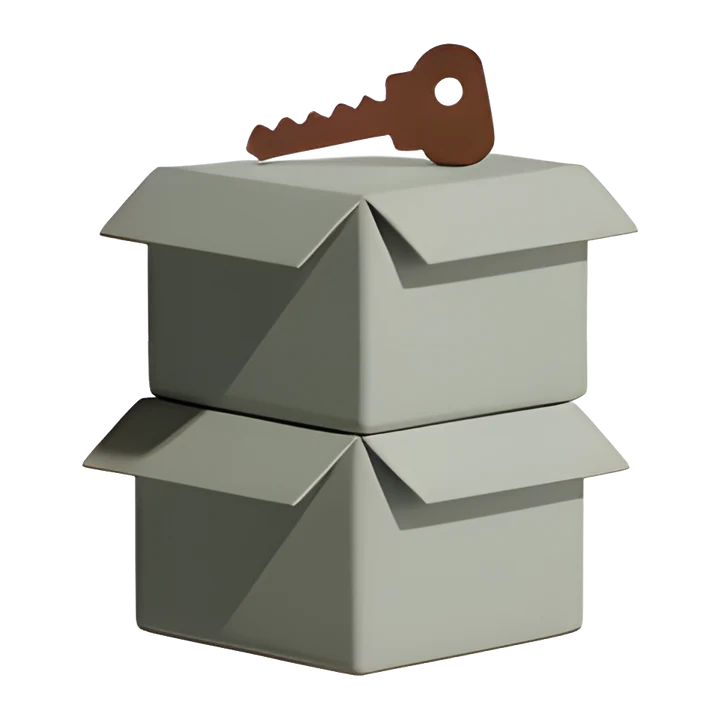
Moving house stirs up everything a child takes for granted: where the bed goes, which way you walk to nursery, who lives next door. Even when the move is something to look forward to, it can feel strange to watch your room empty out. A book about moving house lets your child go through the change in advance, at a calm pace, as the one who is brave enough to go first. They get to see their old room and their new one, pack their own box and knock on the new neighbours' door. The book builds a bridge between what you leave behind and where you are going.
From boxes to new neighbours
A story about moving can take your child through the whole change: choosing what comes along and what can go to someone else, riding in the removal van, sleeping the first night in a place where everything sounds different. It can let your child find something in the new place – a hidden spot in the garden, a neighbour the same age, a cat that seems to live on the stairs.
And it can let the old home live on as a memory your child carries with them, rather than something that simply vanished. Moving day itself is full of pictures: tape that screeches as it comes off the roll, a sofa looking odd out on the pavement, pizza on the floor of an empty kitchen.
Where are you moving to?
The more your child recognises, the safer the story feels. Tell us what the new home is – a flat, a house, another town, another country – and what your child already knows about it: a room with a sloping ceiling, a playground outside, a new nursery. Add one thing from the old home that your child is especially fond of and let it travel all the way through the story.
If your child is leaving a friend behind, the friend can have a place too, perhaps as the one who gets letters from the new home. If your child will be living in two homes from now on, the book can be about exactly that, calmly and without any grown-up taking centre stage.
When the missing comes later
Little children mostly need to hear that the grown-ups and the cuddly toys are coming too. Five-year-olds enjoy counting the boxes and seeing who carries what. For a school-age child it can take a few pages before the new place feels like home, and ten-year-olds can handle a book that says straight out that it is fine to miss things.
Talk about what your child would like to have in the new room. If the missing lingers, a book about feeling homesick might be a good next step.
Your child is the hero
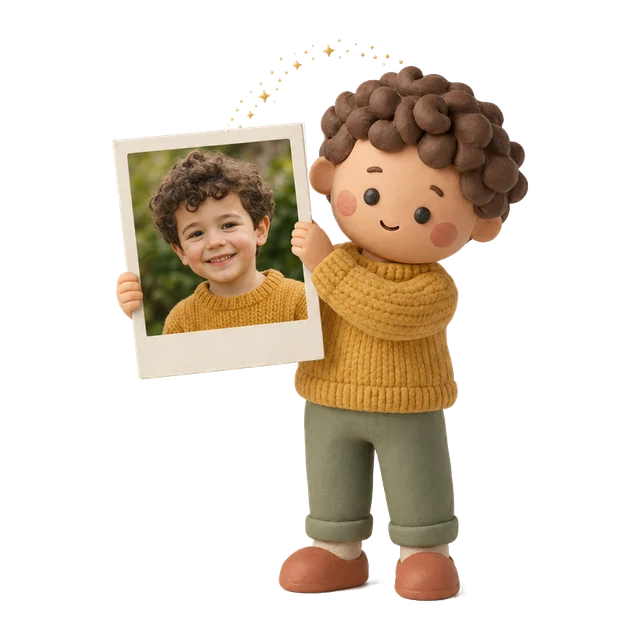
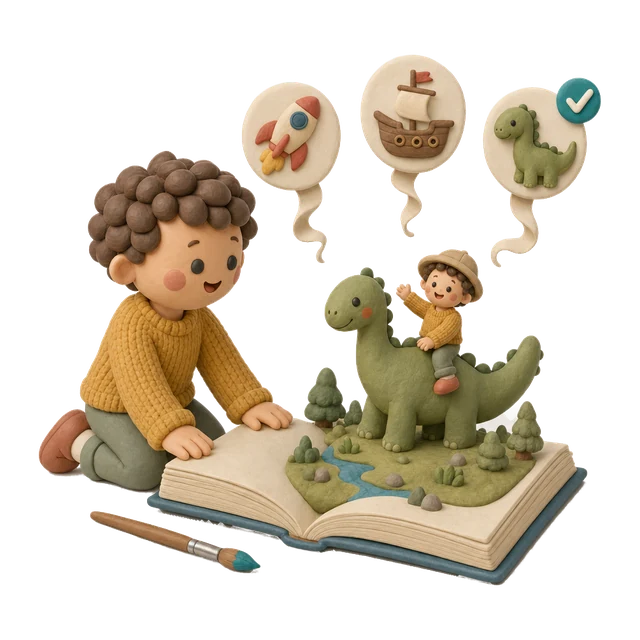
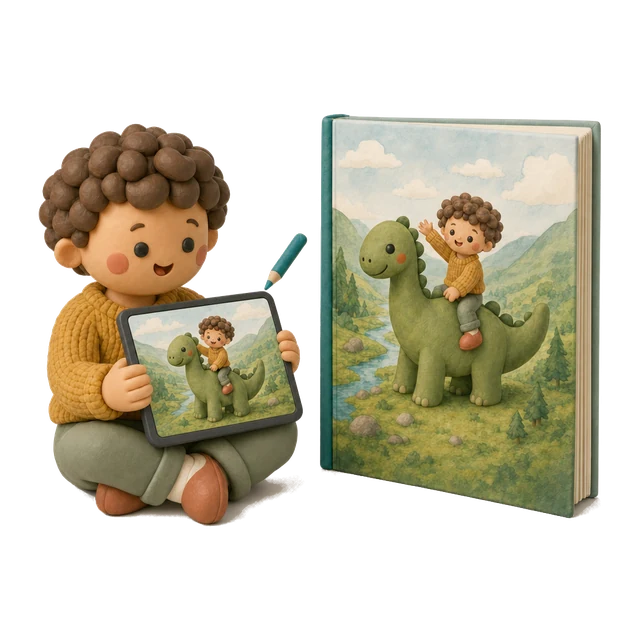
You fill in the child's name, age and what they like, and upload a photo. The story about moving house is written for your very own child, and the thirteen pictures and the cover are drawn from the photo in the style you choose. Brothers and sisters, parents, grandparents or the pet can come along, up to five characters. If you would like to include something that has happened lately, a trip or a lost tooth, just write it and it is woven in.
From eBook to hardback book
The eBook is ready a few minutes after payment. Read it, change the text and ask for new pictures until you are happy. Then order it as an A4 hardback book, printed and sent to your door, or straight to the child as a gift. Do add the colouring pages. Start creating the book or read more about the prices. Would you like to see a finished book before you decide? Browse our example books.
How the story could begin
Your room echoes. It has never done that before. Where your bed used to be there is a paler square on the floor, and on the wall are four little holes where the picture of the boat hung. You are sitting on your box – the one you wrote your name on in thick black pen – listening to the grown-ups carry out the very last lamp. Then it is just you. “Bye, room,” you say, and it sounds bigger than it felt inside your head. You are just about to go when you spot something in the corner where the bookcase stood. A tiny hatch in the skirting board, no bigger than a matchbox. It has always been there, hidden behind the books. Now it is standing ajar. Inside is a folded note with an address on it. It is the address of your new home.
 Christmas
 Birthday
 Unicorns
 Dinosaurs
 Pirates
 Space
 Princes and princesses
 Fire brigade
 Sport
 Mermaids
 Superheroes
 Knights and dragons
 Construction vehicles
 Starting school
 A trip to the farm
 Jungle
 Fairies
 Treasure hunt
 Underwater
 A new baby
 Brushing teeth
 Confidence
 Bedtime story
 The enchanted forest
 Witches and spells
 Giants
 Gnomes
 Wizard school
 Camping
 Time travel
 Haunted house
 Police
 Racing
 Aeroplanes
 Secret mission
 The zoo
 Dressing up
 Building a tree house
 The amusement park
 A train journey
 A visit to the doctor
 The dentist
 The library
 The beach
 The forest
 Baking
 Music
 Dance
 Ancient Egypt
 The Stone Age
 The Vikings
 In the future
 The Middle Ages
 Candy land
 At the North Pole
 The savannah
 Easter
 Halloween
 Lucia
 Midsummer
 New Year
 Name day
 Eid
 Hanukkah
 Becoming a big brother or sister
 Father's Day
 Mother's Day
 Grandparents
 A new pet
 Moving house
 Sleepovers
 A wedding
 Holiday
 Learning to ride a bike
 Giving up the dummy
 Potty training
 Tidying up
 Eating well
 Learning to tell the time
 Learning to count
 The alphabet
 Seasons and weather
 Afraid of the dark
 Tantrums
 Feeling homesick
 Being teased
 Jealousy
 Feeling proud
 Handling big feelings
 Funny story
 Olivia
 Muhammad