Why the theme Learning to tell the time makes a good book
An adventure that suits the child
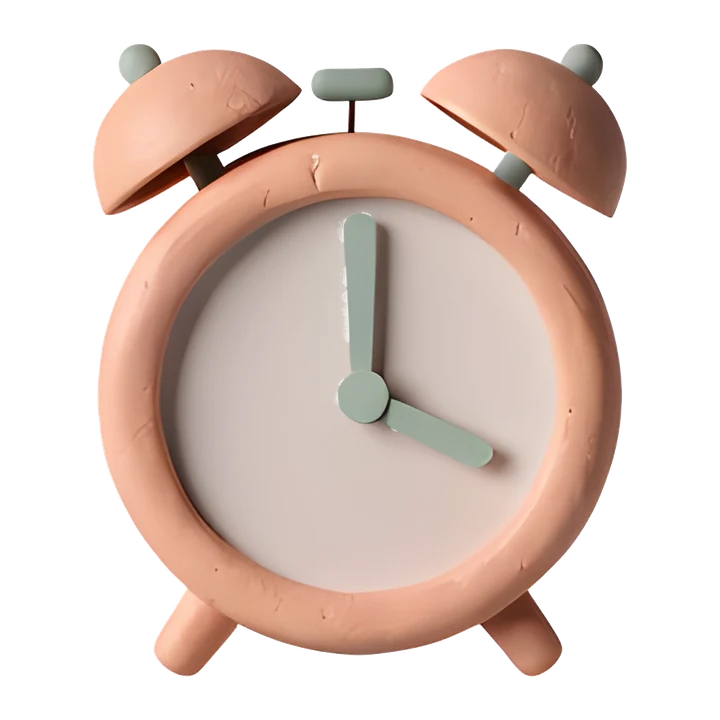
There's a clock on the wall in almost every kitchen, but rarely does anyone explain it properly. “In a quarter of an hour” and “half past six” are hard words until they connect with something your child actually does. In a picture book, time can take shape: breakfast when the short hand points to seven, the bus leaving when the long hand stands straight up. When your child is the one keeping track of time in the story, the clock face becomes something to understand, instead of something grown-ups glance at anxiously in the hall.
Quarter to, half past and quarter past
A clock book can follow a single day hour by hour: the alarm at seven, a snack at three, bath time when the long hand has gone all the way round once more. It can also be about getting there in time, a race against the hands before the train leaves or before the sun goes down. The English way of telling the time has its own knots, and they can find a place in the story. When the long hand points to the 3 it means fifteen minutes, not three, and “twenty-five to” is a phrase that puzzles plenty of children.
Times from your own home
Your child's day already has its fixed times, and those are what the book can build on. Write in when you usually wake up, when it's snack time at nursery, when a parent gets home from work and what time Saturday's film starts. If you have a special clock at home – a cuckoo clock on the wall, an alarm clock shaped like an owl, or a watch your child was given as a present – it can appear in the pictures. If something to do with time has happened recently, a train you nearly missed or a morning when everyone overslept, it can become the start of the book.
Watching time go by
At 0–2 the clock is mostly a sound, tick and tock, and the day splits into morning, mealtimes and night. A four-year-old can begin to tell the short hand from the long one and get a grip on words like before and after. At 6–9 a story where the minutes really matter fits well, with quarters and half-hours part of the plan. For 10+ the book can play with time zones or with a clock that stubbornly insists on running backwards.
After reading, make your own clock from a paper plate with two cardboard hands. Set the hands to the next thing happening today, dinner for example, and let your child call out when the kitchen clock shows the same.
Your child is the hero
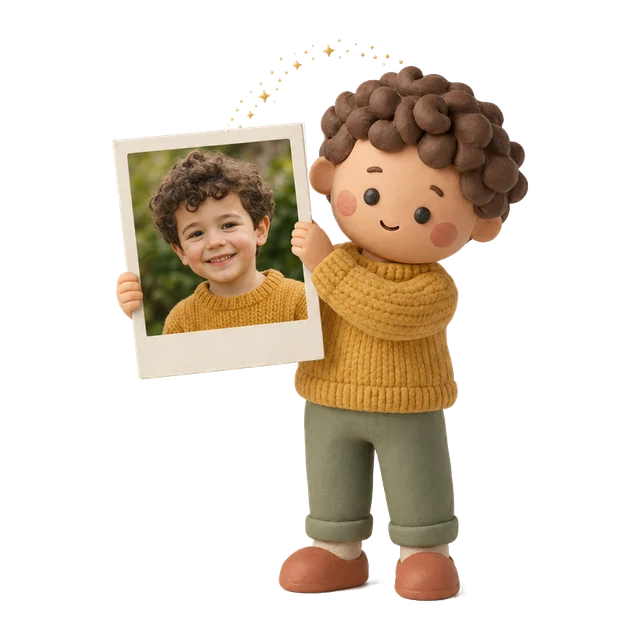
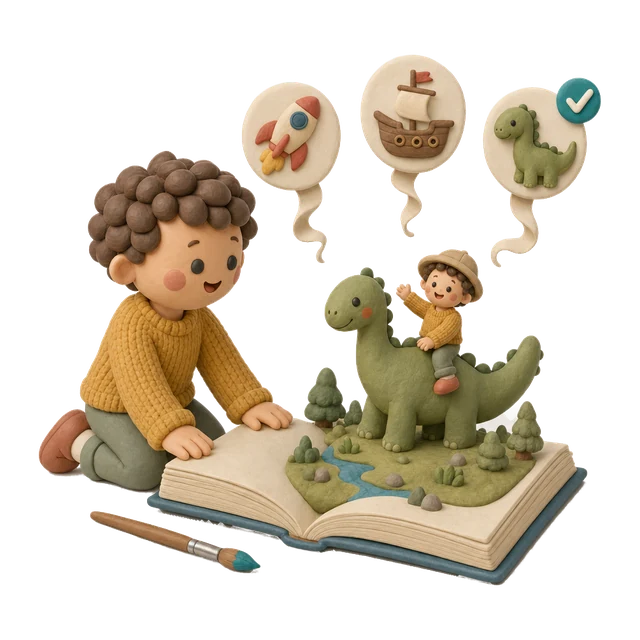
You fill in the child's name, age and what they like, and upload a photo. The story about learning to tell the time is written for your very own child, and the thirteen pictures and the cover are drawn from the photo in the style you choose. Brothers and sisters, parents, grandparents or the pet can come along, up to five characters. If you would like to include something that has happened lately, a trip or a lost tooth, just write it and it is woven in.
From eBook to hardback book
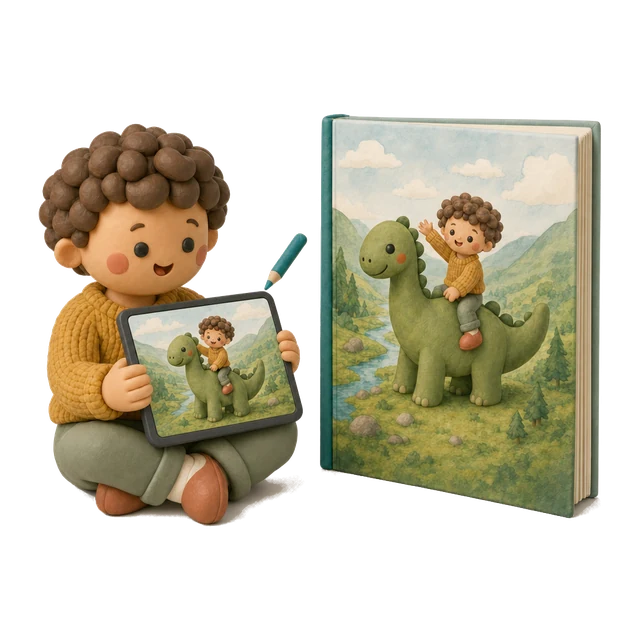
The eBook is ready a few minutes after payment. Read it, change the text and ask for new pictures until you are happy. Then order it as an A4 hardback book, printed and sent to your door, or straight to the child as a gift. Do add the colouring pages. Start creating the book or read more about the prices. Would you like to see a finished book before you decide? Browse our example books.
How the story could begin
Grandad's old wall clock has stopped ticking. The hands stand still at a quarter to three, and the house is so quiet you can hear the fridge humming. “It's never stopped before,” says Grandad, scratching his beard. You climb onto a stool and peer in behind the little glass door. There, between the cogs, sits a mouse in a blue waistcoat, sniffling. “I've lost the key,” it says. “Without it I can't wind the clock, and if it doesn't start again before dinner, the whole day will stand still.” You look at the hands. You know the short one shows the hours and the long one the minutes. It isn't much, but it's more than the mouse knows. It wipes its nose with its tail and points to a hole at the bottom of the wall. “The key rolled in there. You'll fit, I think.”
 Christmas
 Birthday
 Unicorns
 Dinosaurs
 Pirates
 Space
 Princes and princesses
 Fire brigade
 Sport
 Mermaids
 Superheroes
 Knights and dragons
 Construction vehicles
 Starting school
 A trip to the farm
 Jungle
 Fairies
 Treasure hunt
 Underwater
 A new baby
 Brushing teeth
 Confidence
 Bedtime story
 The enchanted forest
 Witches and spells
 Giants
 Gnomes
 Wizard school
 Camping
 Time travel
 Haunted house
 Police
 Racing
 Aeroplanes
 Secret mission
 The zoo
 Dressing up
 Building a tree house
 The amusement park
 A train journey
 A visit to the doctor
 The dentist
 The library
 The beach
 The forest
 Baking
 Music
 Dance
 Ancient Egypt
 The Stone Age
 The Vikings
 In the future
 The Middle Ages
 Candy land
 At the North Pole
 The savannah
 Easter
 Halloween
 Lucia
 Midsummer
 New Year
 Name day
 Eid
 Hanukkah
 Becoming a big brother or sister
 Father's Day
 Mother's Day
 Grandparents
 A new pet
 Moving house
 Sleepovers
 A wedding
 Holiday
 Learning to ride a bike
 Giving up the dummy
 Potty training
 Tidying up
 Eating well
 Learning to tell the time
 Learning to count
 The alphabet
 Seasons and weather
 Afraid of the dark
 Tantrums
 Feeling homesick
 Being teased
 Jealousy
 Feeling proud
 Handling big feelings
 Funny story
 Olivia
 Muhammad