Why the theme A visit to the doctor makes a good book
An adventure that suits the child
At the doctor's, a child's own body suddenly becomes something people listen to, feel and look inside. That can be exciting and a little uncomfortable at the same time. A book in which your child goes to the doctor and knows what's coming – the stethoscope, the light in the ear, the scales – gives them words for what happens and makes it easier to ask questions. It's a good fit before a planned appointment, but also afterwards, when your child wants to tell everyone how it went and what the doctor said.
Stethoscope, torch and a plaster
A doctor's visit in a book can begin in the waiting room and end with a spotty plaster. In between, your child can be weighed and measured, say a long “aaah” while the doctor looks down their throat, and see a light shine into their ear. Your child can swap roles and examine their cuddly toy, or help a brother or sister who is more nervous. Everything is described in small, predictable steps, so that nothing comes as a surprise.
The doctor in the book can explain things with everyday pictures: the stethoscope as a telephone to the heart, the light as a torch for ears. And perhaps your child gets to press the button that raises the couch.
Why you're going
The book helps most when it resembles your own visit. Is it a routine check-up with the health visitor, a sore ear or an arm that needs looking at? If something particular is going to happen, like an injection or a plaster cast, mention it when you make the book. Then the book will show exactly that, calmly and without drama. Tell us, too, who's coming along, what your child wants to hold on to and what's waiting afterwards – a walk, a treat from the bakery or an evening on the sofa at home.
Playing doctors afterwards
For the very youngest, the book offers body words to point at: ear, mouth, tummy, foot. At pre-school age, your child follows the visit one step at a time. A seven-year-old asks the doctor why, and gets answers that make sense. From ten upwards, the book can hold the worry beforehand and the relief afterwards, with more words for the feelings.
Play doctors at home after reading. Show your child how to find the pulse on the inside of the wrist or on the neck. The heart is a muscle that pumps blood all round the body, and every thump you feel is one beat. Run a lap round the kitchen and feel again – now it's beating faster. Your child can also write a doctor's note for the teddy and stick on a plaster of just the right size.
Your child is the hero
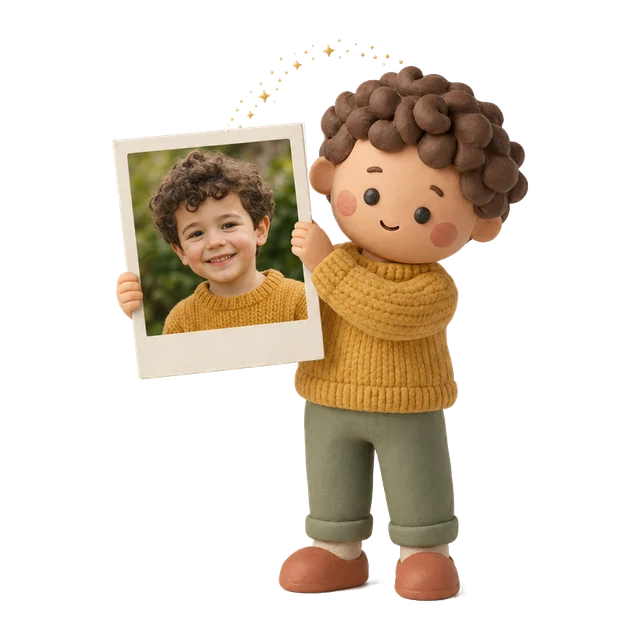
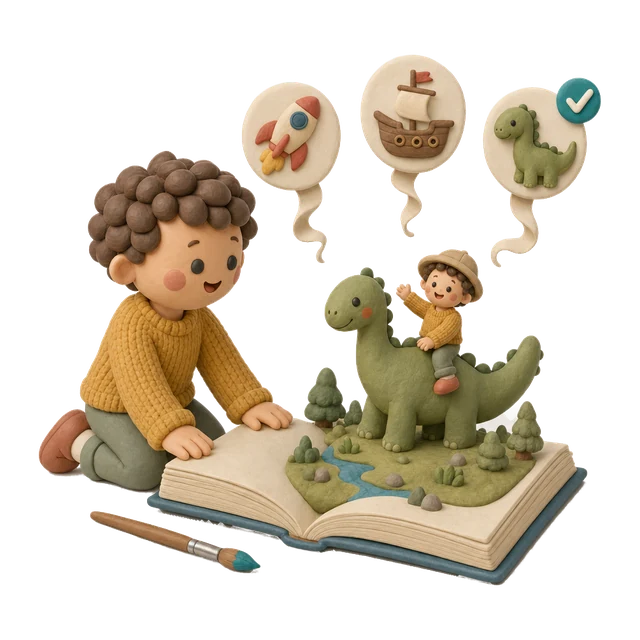
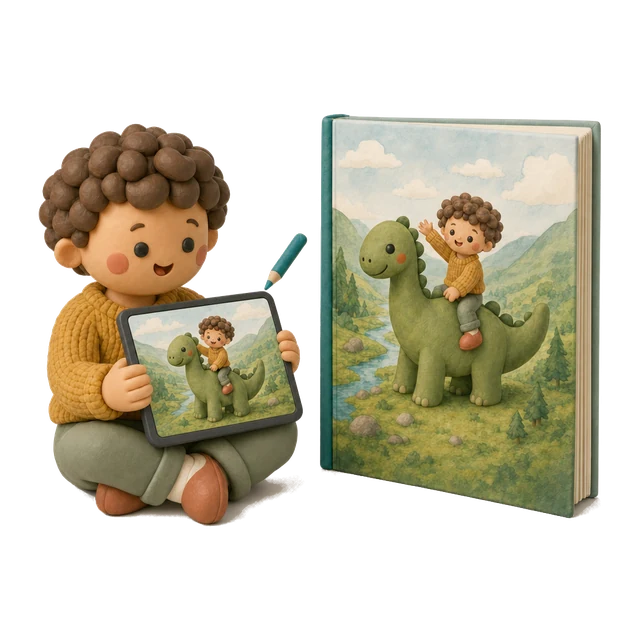
You fill in the child's name, age and what they like, and upload a photo. The story about a visit to the doctor is written for your very own child, and the thirteen pictures and the cover are drawn from the photo in the style you choose. Brothers and sisters, parents, grandparents or the pet can come along, up to five characters. If you would like to include something that has happened lately, a trip or a lost tooth, just write it and it is woven in.
From eBook to hardback book
The eBook is ready a few minutes after payment. Read it, change the text and ask for new pictures until you are happy. Then order it as an A4 hardback book, printed and sent to your door, or straight to the child as a gift. Do add the colouring pages. Start creating the book or read more about the prices. Would you like to see a finished book before you decide? Browse our example books.
How the story could begin
The door to the consulting room has a sign with a balloon on it. Inside, it smells clean, a bit like soap. On the wall hangs a chart of letters in different sizes, and on the couch there's a sheet of paper that crinkles as you climb up. “Hello, I'm Amir and I'm a doctor,” says the man in the white coat. “May I listen to your heart?” He lets you put the little earpieces into your own ears and presses the round part against your chest. Ba-dum. Ba-dum. It sounds like someone knocking from the inside. You listen for a long time. Then there's a knock at the door for real. A nurse peeps in with a teddy bear in her arms. “Sorry to interrupt,” she says. “But Teddy has a tummy ache, and there's only one doctor he'll let examine him. He wants you.”
 Christmas
 Birthday
 Unicorns
 Dinosaurs
 Pirates
 Space
 Princes and princesses
 Fire brigade
 Sport
 Mermaids
 Superheroes
 Knights and dragons
 Construction vehicles
 Starting school
 A trip to the farm
 Jungle
 Fairies
 Treasure hunt
 Underwater
 A new baby
 Brushing teeth
 Confidence
 Bedtime story
 The enchanted forest
 Witches and spells
 Giants
 Gnomes
 Wizard school
 Camping
 Time travel
 Haunted house
 Police
 Racing
 Aeroplanes
 Secret mission
 The zoo
 Dressing up
 Building a tree house
 The amusement park
 A train journey
 A visit to the doctor
 The dentist
 The library
 The beach
 The forest
 Baking
 Music
 Dance
 Ancient Egypt
 The Stone Age
 The Vikings
 In the future
 The Middle Ages
 Candy land
 At the North Pole
 The savannah
 Easter
 Halloween
 Lucia
 Midsummer
 New Year
 Name day
 Eid
 Hanukkah
 Becoming a big brother or sister
 Father's Day
 Mother's Day
 Grandparents
 A new pet
 Moving house
 Sleepovers
 A wedding
 Holiday
 Learning to ride a bike
 Giving up the dummy
 Potty training
 Tidying up
 Eating well
 Learning to tell the time
 Learning to count
 The alphabet
 Seasons and weather
 Afraid of the dark
 Tantrums
 Feeling homesick
 Being teased
 Jealousy
 Feeling proud
 Handling big feelings
 Funny story


 Olivia
 Muhammad